
|
During my research, (I found) there was very little written material concerning the black community. Therefore, I gathered information from interviews. I interviewed seven individuals: Jeanne Mae Espy, Gladys Hicks, Sylvester Williams, Leola Robinson, James Luckie, Mabel Watson, and Susie Black. There are others to be interviewed, however. During the interview, the individuals commented on what they had experienced, or what was told to them by a friend or relative. The information presented covers the period from 1900 through 1957. The reasoning for this is because the Alger-Sullivan Lumber Company changed ownership and personality after 1957.
Century, like most southern towns
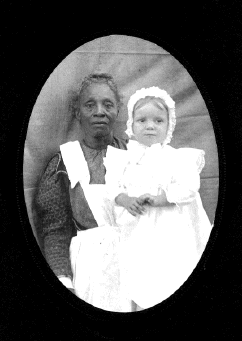
However, from the interviews, Blacks did not appear angry at the past. To many of the citizens, the old days included peace, goodness, and isolation. An old retired Negro worker summed up the situation by saying that he'd "rather live in his old mill town than go to heaven." When asked why, he said, "Well, you have to die to go to heaven but if you abide by the company rules, you can live and stay." But a younger Centurion stated one of his memorable pastimes was going to Flomaton Junction and Anna Cynthia Hauss and her nanny 11 8 1905
The Black Experience in Century Next page This page last modified on Friday, February 11, 2005 |