
Tree background

When I asked the black citizens of the community to talk about the town, they began their conversation with a half-hardy smile, a twinkling of the eye and a story. One story that I heard concerned the black cooks of Century. Blacks recall that even during the beginning of the community, the poorest white family could afford a black cook. This situation, to many, reflected the fact that the black workers at the mill were getting paid less than the white workers. Apparently, a
number of cooks called
a meeting one afternoon
regarding certain matters.
No one, today, can really
say what the cooks talked
about but it was rumored
that the cooks had
planned to poison their
employers. The employers,
mill families, heard about
the plot and fired the cooks.


Before the establishment of
the Alger-Sullivan Lumber
Company in 1900, a small
black community lived in the
area; an area 2.1 miles south
of Flomaton, Alabama.
The community identified
with a black church founded
in 1878 called "Teaspoon Baptist Church" and after the name of the town. At the turn of the century, the lumber company was established and according to the church's history, the town's name changed from Teaspoon to Century and later, the church changed its name to Pilgrim Lodge Baptist Church. The town's name derived from its creation at the turn of the twentieth century. The blacks, who lived in the community before the establishment of the mill, depended on the existing lumber mills and turpentine farms in the area for employment. Some of the citizens remembered when their parents and grandparents talked about working in Bluff Springs, one mile south of Century, and McDavid, ten miles south, and Cantonment, twenty-nine miles south of Century. By the time the Alger-Sullivan mill was built many of these areas were losing or had lost their economic life.

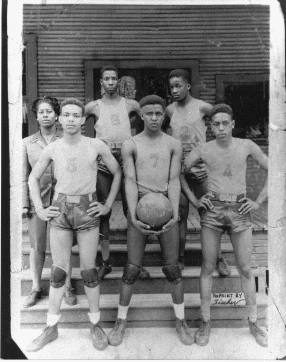
Basketball team, 1945/1946
( click picture for larger image)

The Black Experience in Century

TEASPOON

Next page

This page last modified on Wednesday, April 14, 2004